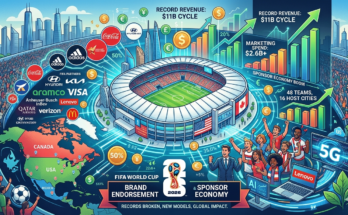
With the 2026 FIFA World Cup being the first to be co-hosted by three nations (USA, Canada, Mexico) and expanded to 48 teams, FIFA has introduced a number of policy and governance changes aimed at improving accountability, rights, transparency, and fairness. These reforms respond to past criticisms and incorporate lessons from prior tournaments. This article explores those changes, the challenges they face, and how they might shape the legacy of 2026.
1. Human Rights Framework & Safeguarding Commitments
One of the headline governance changes is the FWC26 Human Rights Framework, a guidance document co-developed by FIFA and host city committees.
Some highlights:
- The framework ensures inclusion, non-discrimination, safeguarding, and access to remedy for all participants, including workers, fans, volunteers, and local communities.
- Host City Committees are required to create Host City Human Rights Action Plans, tailored to local conditions, in consultation with civil society groups.
- Worker rights are emphasized — fair wages, safe working conditions, no discrimination, and procurement practices aligned with human rights and environment standards.
- The framework also addresses environmental impacts, including responsibility for mitigation and ensuring that vulnerable populations are protected from adverse consequences.
FIFA’s 2026 sustainability and human rights strategy claims that the tournament will be staged with a view to climate, disability inclusion, health, and human rights integration.
2. Bidding & Legacy vs Infrastructure Focus
A key governance shift: human rights criteria are now embedded in the bidding process. The 2026 bidding documents required prospective hosts to commit to human rights protections—a first in World Cup history.
- The “United Bid” (USA/Canada/Mexico) emphasized no new stadium construction as a preferred principle, aiming to reduce environmental and financial risk.
- Legacy is given more weight — the long-term social, economic, and human rights outcomes are foregrounded rather than just new infrastructure.
3. Club Compensation & Financial Governance
FIFA is distributing a record USD 355 million to clubs worldwide under an expanded Club Benefits Programme (CBP) for 2026.
Notable changes:
- For the first time, clubs will get compensation for releasing players not only for the final tournament but also for qualifiers.
- This aims to reduce conflict between clubs and national teams and enhance fairness in burden sharing.
Financial transparency and compliance with governance regulations (e.g. FIFA Statutes, Code of Ethics, Governance Regulations) remain under revision and scrutiny.
4. Governance, Accountability & Reform Pressure
While some reforms exist on paper, critics remain skeptical about their implementation and enforcement.
- Observers argue that FIFA still lacks strong external oversight or checks beyond internal mechanisms. Some reforms are seen as symbolic rather than transformative.
- Amnesty International and human rights groups are pushing FIFA to show tangible, legally binding commitments, especially around U.S. immigration policy, freedom of expression, and inclusion.
- Debate continues over FIFA’s handling of issues such as race and discrimination, requiring stronger enforcement and sanctioning mechanisms. (Recent fines for discriminatory incidents show the disciplinary process is active.)
5. Match Scheduling, Safety & Player Welfare
Because many host cities will face extreme heat risk, there is pressure to adapt match policies:
- Proposals to extend halftime or add additional water/drink breaks have been raised to protect player health.
- Concerns over cooling methods, match timing (evening vs daytime), and stadium design are under consideration.
Security, crowd management, data privacy, and use of surveillance/AI in stadiums are also part of revised policy discussions under the Human Rights Framework.
6. Risks & Things to Watch
- Implementation gaps: A lot depends on local host city compliance — local governments, regulators, and civil society must engage.
- Political interference: Immigration policies in the U.S. could conflict with FIFA’s goals of inclusion and free access for fans.
- Enforcement of human rights: Having frameworks is one thing; enforcing violations, offering remedies, and being transparent is another.
- Governing resistance: Traditional FIFA governance structures might resist deeper accountability or ceding of power to external oversight.
Conclusion
FIFA’s policies for 2026 show a clear shift toward embedding human rights, labor standards, transparency, and equitable financial treatment into the governance of the tournament. Yet the effectiveness of these changes will rely heavily on implementation, oversight, and real-world pressure. How well FIFA balances ambition and accountability will shape the legacy of the 2026 World Cup more than any match.