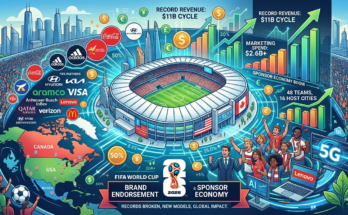
The upcoming FIFA World Cup 2026 is not just about football — it’s about transformation. For the first time in history, the tournament will be hosted across three countries: USA, Canada, and Mexico, spanning 16 cities and setting a new benchmark for global sporting events.
But beyond the matches, something even bigger is happening — a massive infrastructure and technology revolution that will reshape these cities for decades to come.
A New Era of Infrastructure Development 🏗️
Hosting a World Cup always brings development. However, 2026 is on another level.
Stadium Upgrades & Smart Venues
- Existing stadiums are being modernized with smart seating, digital ticketing, and AI-powered crowd control.
- Venues are integrating 5G connectivity, enabling real-time fan engagement and seamless streaming.
- Sustainability is a major focus — many stadiums aim for low carbon emissions and energy efficiency.
👉 This means fans will experience football in ways never seen before — faster entry, better connectivity, and immersive viewing.
Transportation Revolution 🚆
One of the biggest challenges of a multi-country World Cup is movement — and that’s where innovation comes in.
Smart Mobility Systems 🚄
The 2026 World Cup is uniquely challenging because of the vast distances between cities. Within the cities themselves, the focus is on “Last Mile” connectivity.
- Expansion: Cities like Seattle and Los Angeles are accelerating light rail expansions to ensure fans don’t rely solely on cars, which would lead to historic gridlock.
- Walkability: Many host cities are investing in “Fan Zones” connected by pedestrian-only corridors, encouraging a European-style walking culture that could permanently change urban planning in North America.
- Expansion of metro, rail, and bus networks in key host cities.
- Introduction of smart traffic management systems using AI and real-time data.
- Integration of contactless payment systems for transport and event access.
Cities like Los Angeles, Toronto, and Mexico City are investing heavily in urban mobility upgrades, which will benefit residents long after the tournament ends.

Technology at the Core 📡
AI & Data Analytics 🤖
Artificial Intelligence will play a central role in:
- Crowd prediction and management
- Security surveillance
- Real-time match analytics
Connected Fan Experience 📱
Fans will enjoy:
- Mobile-first ticketing systems
- Real-time match stats and AR experiences
- Personalized content through apps and digital platforms
VAR & Smart Ball Technology 🛰️
Building on previous tournaments, FIFA will enhance:
- Video Assistant Referee (VAR) systems
- Connected match ball technology for accurate decisions.
Sustainability & Green Initiatives 🌱
World Cup 2026 is aiming to be one of the most environmentally responsible tournaments ever. FIFA has committed to making 2026 a benchmark for sustainability. This isn’t just about recycling bins; it’s about the lifecycle of the event.
Existing Venues: Unlike previous World Cups that built “White Elephant” stadiums (expensive venues that go unused after the event), 2026 utilizes existing, world-class NFL and Liga MX stadiums.
Zero-Waste Goals: Host cities like Vancouver and San Francisco (Bay Area) are implementing strict zero-waste mandates for vendors and water-reduction technologies for pitch maintenance.

Key Initiatives 🌿
- Use of renewable energy in stadiums
- Carbon offset programs
- Eco-friendly construction materials
- Waste reduction and recycling systems
👉 This reflects a global shift — sports events are no longer just entertainment, but also a platform for sustainability leadership.